
Dealing With Normal Puppy Behavior: Chewing
Puppies explore the world with their mouths, and chewing is a natural behavior—especially during teething. While normal, it must be managed to prevent damage to household items.
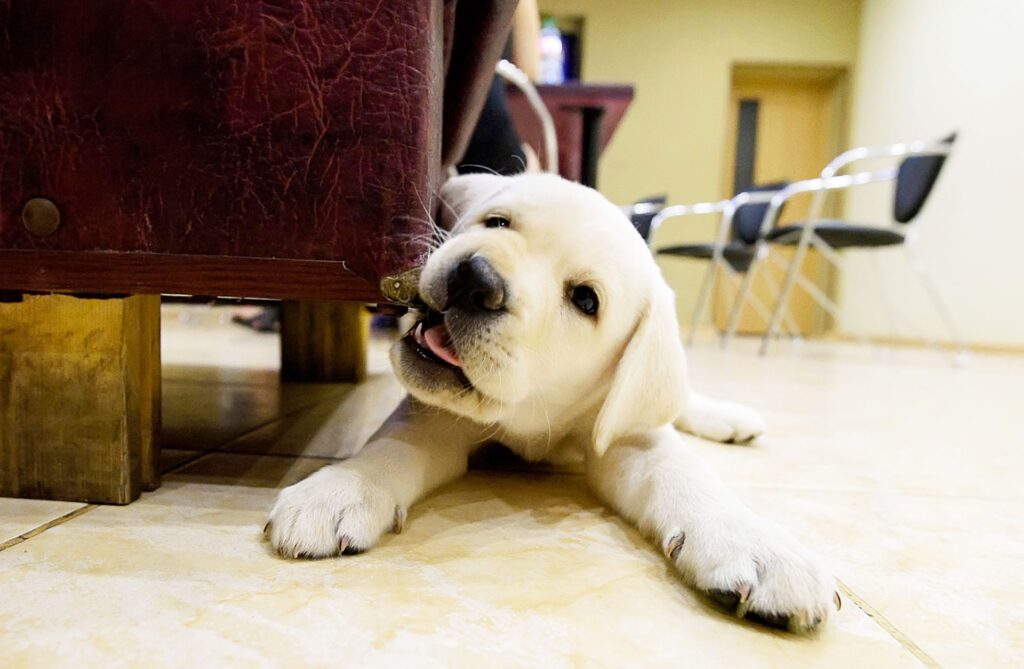
Preventing Unwanted Chewing
- Puppy-proof your home. Keep shoes, trash, and valuables out of reach.
- Redirect behavior. If caught chewing on something inappropriate, make a loud noise, replace it with a chew toy, and praise the puppy.
- Use deterrents. Apply bitter sprays to furniture or objects to discourage chewing.
- Avoid confusion. Don’t give old shoes or toys that resemble off-limits items.
- Supervise closely. Use baby gates or tether the puppy to you with a leash when indoors.
- Crate training. Confine your puppy in a crate or safe area when unsupervised. Puppies under five months should not be crated longer than four hours.
- Provide exercise. Play, walk, and interact with your puppy daily to burn excess energy.
Encouraging Good Chewing Habits
- Offer a variety of chew toys and rotate them regularly.
- Use food-stuffed toys to make chewing more rewarding.
- If teething, provide a frozen wet washcloth to soothe sore gums.
What Not to Do
- Never punish after the fact. Puppies associate discipline with their current actions, not past behavior.
- Avoid punishment-based training. Scolding or physical corrections can create fear and anxiety.
Other Causes of Chewing
While chewing is normal, excessive destruction may indicate separation anxiety, fear, or boredom. If issues persist, seek guidance from a professional trainer.
With patience and training, your puppy will learn appropriate chewing behaviors and grow into a well-behaved companion.